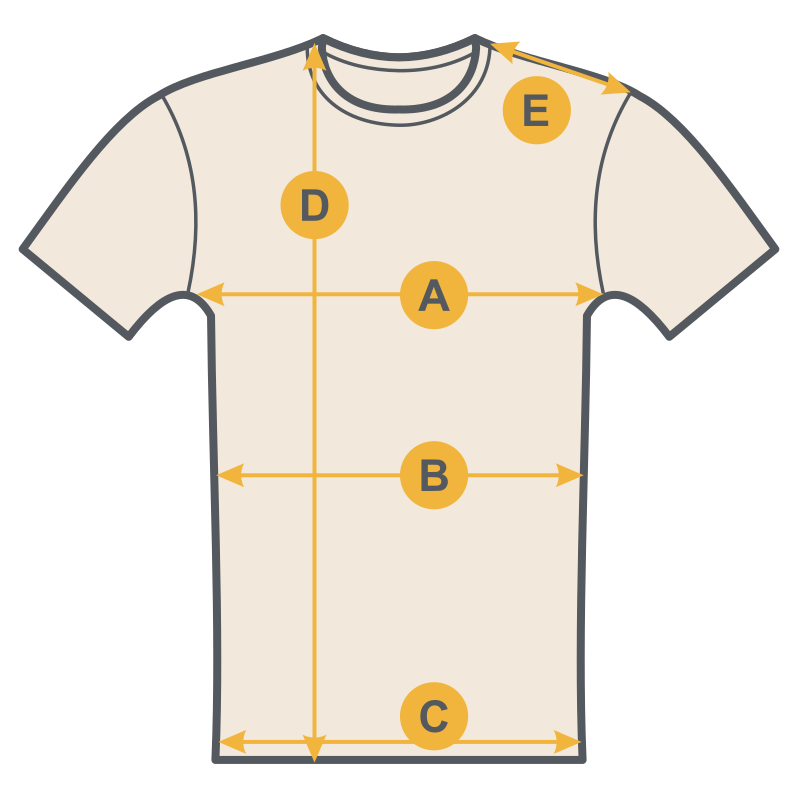
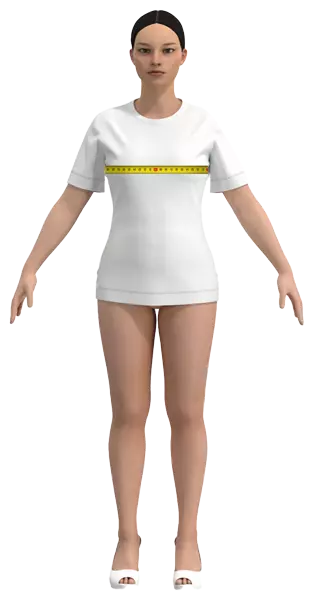
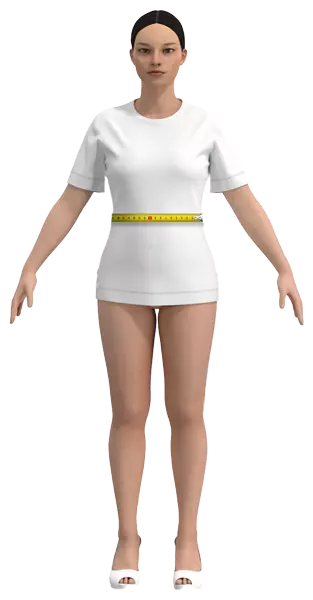
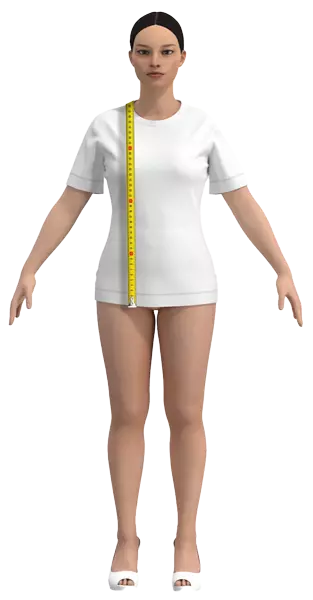
Measure the Chest (Bust) — “A” – From armpit to armpit
Measure the Waist — “B” – Across the narrowest point
Measure the Hips — “C” – Across the bottom hem
Measure the Length — “D” – From the top of the shoulder (near the collar) to the bottom hem
Measure the Shoulders — “E” – From one shoulder seam to the other
Model 4 – Men’s Wide Shoulders Fit (Flat Measurements)
Model 4 is tailored for broad shoulders and narrow waists.
It also fits women and kids with similar body shapes.
Please check the sizing chart for the perfect fit.
Size
Chest (Bust) — “A”
Waist — “B”
Hips — “C”
Length — “D”
Shoulders — “E”
inches
cm
inches
cm
inches
cm
inches
cm
inches
cm
4XS
16 1/4
41.27
15 1/4
38.74
15 1/4
38.74
26 1/2
67.31
4
10.16
3XS
16 3/4
42.55
15 3/4
40.01
15 3/4
40.01
27
68.58
4 1/8
10.48
2XS
17 1/4
43.81
16 1/4
41.28
16 1/4
41.28
27 1/2
69.85
4 1/4
10.80
XS
17 3/4
45.09
16 5/8
42.23
16 5/8
42.23
28
71.12
4 1/2
11.43
S
18 1/4
46.36
17 1/8
43.52
17 1/8
43.52
28 1/2
72.39
4 3/4
12.07
M
18 7/8
47.94
17 3/4
45.09
17 3/4
45.09
29
73.66
5
12.70
L
19 7/8
50.48
18 3/4
47.63
18 3/4
47.63
29 1/2
74.93
5 1/4
13.34
XL
20 7/8
53.02
19 3/4
50.17
19 3/4
50.17
30
76.2
5 1/2
13.97
2XL
21 1/2
54.61
20 1/2
52.07
20 1/2
52.07
30 1/2
77.47
5 3/4
14.61
3XL
23
58.42
22
55.88
22
55.88
31
78.74
6
15.24
4XL
24 1/2
62.23
23 1/2
59.69
23 1/2
59.69
31 1/2
80.01
6 1/2
16.51
T-Shirt Size Guide – Flat Lay Measurements
Finding your perfect fit is easy.
Lay a well-fitting T-shirt flat on a surface.
Measure across these key areas:
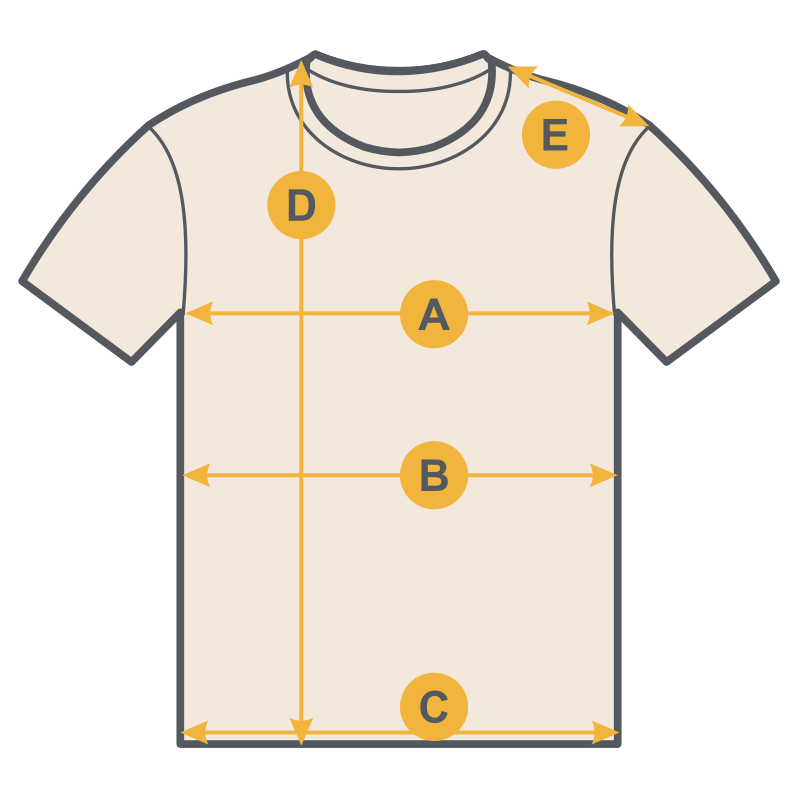
Measure the Chest (Bust) — “A” – From armpit to armpit
Measure the Waist — “B” – Across the narrowest point
Measure the Hips — “C” – Across the bottom hem
Measure the Length — “D” – From the top of the shoulder (near the collar) to the bottom hem
Measure the Shoulders — “E” – From one shoulder seam to the other
Model 3 tee with balanced proportions and clean lines.
This versatile style provides a relaxed fit suitable for all body types.
Although designed for men, it looks great on women who prefer a casual or slightly oversized tee.
Size
Chest (Bust) — “A”
Waist — “B”
Hips — “C”
Length — “D”
Shoulders — “E”
-
inches
cm
inches
cm
inches
cm
inches
cm
inches
cm
4XS
16 7/8
42.86
15 3/4
40.01
16 7/8
42.86
26
66
4 3/4
12.07
3XS
17 3/8
44.15
16 1/4
41.28
17 3/8
44.15
26 1/2
67.31
4 7/8
12.38
2XS
17 7/8
45.41
16 3/4
42.55
17 7/8
45.41
27
69
5
12.70
XS
18 3/8
46.67
17 1/4
43.82
18 3/8
46.67
27 1/2
69.85
5 1/8
13.02
S
19 1/8
48.58
18
45.72
19 1/8
48.58
28
71
5 1/4
13.34
M
19 7/8
50.5
18 3/4
47.63
19 7/8
50.5
28 1/2
72.39
5 3/8
13.65
L
20 5/8
52.39
19 1/2
49.53
20 5/8
52.39
29
74
5 1/2
13.97
XL
21 3/8
54.29
20 1/4
51.44
21 3/8
54.29
29 1/2
74.93
5 5/8
14.29
2XL
22 1/8
56.2
21
53.34
22 1/8
56.2
30
76
5 3/4
14.61
3XL
22 7/8
58.1
21 3/4
55.25
22 7/8
58.1
30 1/2
77.47
5 7/8
14.92
4XL
23 5/8
60
22 1/2
57.15
23 5/8
60
31
78.74
6
15.24
T-Shirt Size Guide – Flat Lay Measurements
Finding your perfect fit is easy.
Lay a well-fitting T-shirt flat on a surface.
Measure across these key areas:
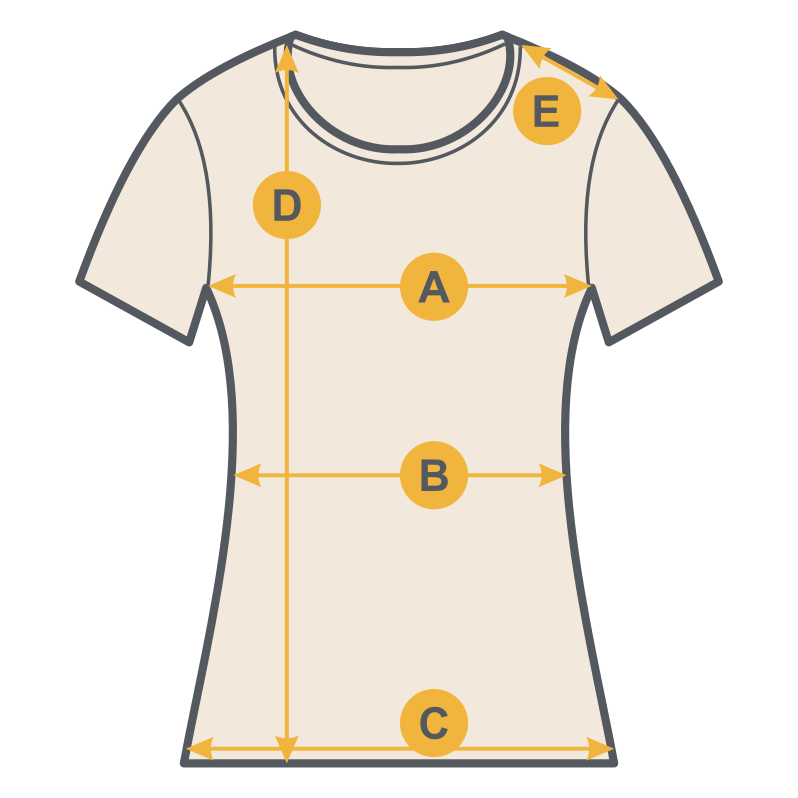
Measure the Chest (Bust) — “A” – From armpit to armpit
Measure the Waist — “B” – Across the narrowest point
Measure the Hips — “C” – Across the bottom hem
Measure the Length — “D” – From the top of the shoulder (near the collar) to the bottom hem
Measure the Shoulders — “E” – From one shoulder seam to the other
Model 1 – Women’s & Girl’s Fitted Tee (Flat-Lay Measurements)
Designed with a flattering feminine silhouette, this tee features a gently curved waist and a tailored fit
that complements the body without clinging.
Perfectly suited for women and girls alike, it offers a comfortable and stylish fit at any age.
Size
Chest (Bust) — “A”
Waist — “B”
Hips — “C”
Length — “D”
Shoulders — “E”
inches
cm
inches
cm
inches
cm
inches
cm
inches
cm
4XS
14 1/2
36.83
13 1/4
33.66
15 1/2
39.37
23 3/4
60.33
3 1/4
8.26
3XS
15 1/2
39.37
14
35.56
16 1/4
41.28
24 1/4
61.6
3 1/4
8.26
2XS
16 1/4
41.28
14 3/4
37.47
17
43.18
25
63.5
3 3/8
8.57
XS
17
43.18
15 1/2
39.37
18
45.72
25 1/2
64.77
3 1/2
8.89
S
18
45.72
16 1/2
41.91
19
48.26
26 1/4
66.68
3 5/8
9.21
M
19
48.26
17 1/2
44.45
20
50.8
26 3/4
67.95
3 3/4
9.53
L
20
50.8
18 1/4
46.36
21
53.34
27 1/4
69.22
3 7/8
9.84
XL
21
53.34
19 1/4
48.9
22
55.88
27 3/4
70.49
4
10.16
2XL
22
55.88
20 1/4
51.44
23
58.42
28 1/4
71.76
4 1/8
10.48
3XL
22 3/4
57.79
21
53.34
23 3/4
60.33
28 3/4
73.03
4 1/4
10.80
4XL
23 1/2
59.69
21 3/4
55.25
24 1/2
62.23
29
73.66
4 1/2
11.43
Pima Prima® Size Guide
Finding the perfect fit is key to feeling comfortable and confident in your Pima Prima® T-shirt.
Below are the essential measurements for each model to help you choose the right size.
Key Measurements Explained:
Bust/Chest
Measured across the fullest part of the chest (for women) or chest width (for men)
Waist/Hips
Measured at the narrowest point of the waist or fullest part of the hips (for women)
Length
Measured from the highest shoulder point to the bottom hem of the T-shirt
Our Models:
Model 1 – Women’s Fitted Designed for a flattering, feminine shape with a slightly curved waist. Perfect on its own or layered under a jacket.
Model 3 – Classic Men’s - fit a Women. A timeless straight-cut fit with balanced proportions, suitable for all body types.
Model 4 – Men’s Wide Shoulders Fit Created for broader chests and slimmer waists — this athletic cut tapers naturally for a clean, modern silhouette.
Note:
Models 3 and 4, designed with a relaxed and growth fit, can also perfectly suit petite women looking for an oversized, comfortable style. Just be sure to check the measurements carefully to find the best fit for you.
Fit with Confidence – And Consciousness At Pima Prima® we want you to feel great in your T-shirt. That’s why we offer returns if you're not fully satisfied with your size. But we’re also here to address a bigger issue: the environmental impact of returns and long-distance logistics.
Every return shipped across borders contributes to unnecessary carbon emissions and packaging waste. Our goal is to reduce this burden by helping you choose the right size the first time — through clear measurements, detailed guidance and personalized support.
The problem we’re solving: Traditional fashion returns create up to 15 million metric tons of CO₂ emissions annually and generate tons of landfill waste. We're working to minimize that footprint — not by eliminating returns, but by making them smarter, fewer, and more sustainable.
Wait! Don’t Go Yet! 👋
Don’t leave these cozy Pima Cotton outfits behind! 😊 Take another look, maybe you missed something?
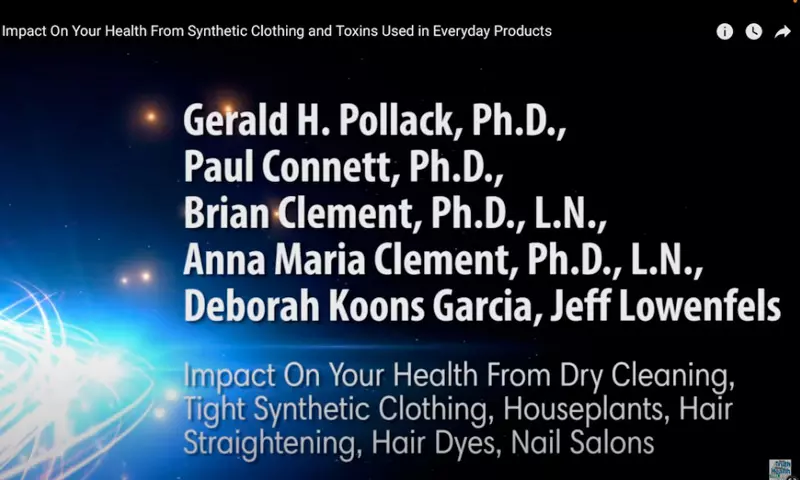
Conference “Impact On Your Health From Synthetic Clothing and Toxins Used in Everyday Products” 2016
What if the clothes you wear every day were quietly affecting your health?
Most of us think of clothing as protection and style, but behind the fabric lies a hidden story. From synthetic fibers to chemical treatments, the very shirts and pants we rely on may be exposing our skin—the body’s largest organ—to toxins that impact our hormones, immune system and overall well-being. At the conference Impact On Your Health From Synthetic Clothing and Toxins Used in Everyday Products, researchers revealed just how intimate the relationship is between what we wear and our health, sparking a movement to rethink fashion from the ground up.
In 2016, amidst the hustle and bustle of academic and professional circles, a critical conversation began to gain momentum. It centered on a topic often overlooked in mainstream discourse: the impact of synthetic clothing and toxins in everyday products on human health. As PhD researchers convened to delve into this pressing issue, they illuminated a fundamental truth – the clothes we wear constitute one of the most immediate environments that intimately interacts with our bodies.
The significance of this realization cannot be overstated. Our skin, the largest organ in our body, acts as a porous barrier, absorbing substances it comes into contact with. From the polyester-blend shirt against our skin to the chemical-laden detergents used to wash our clothes, every fabric and substance has the potential to influence our well-being.
Consider for a moment the ubiquitous presence of synthetic fibers in our wardrobes. Polyester, nylon, acrylic – these materials have become staples in the textile industry, prized for their affordability and durability. However, hidden within their synthetic composition lie a cocktail of chemicals that can wreak havoc on our health. Phthalates, formaldehyde and flame retardants are just a few examples of substances found in clothing that have been linked to skin irritation, hormone disruption and respiratory issues.
Phthalates: Commonly used as plasticizers in synthetic fabrics, phthalates have been linked to hormone disruption, reproductive toxicity, and developmental effects.
Formaldehyde: Used in wrinkle-resistant finishes, formaldehyde can cause skin irritation and has been classified as a human carcinogen by the International Agency for Research on Cancer (IARC). A study in Environmental Research discusses the risks of formaldehyde exposure through clothing, particularly for infants and pregnant women. The chemical is linked to skin irritation, allergic reactions, and is classified as a human carcinogen.
Flame Retardants: These chemicals, such as tris(chloropropyl) phosphate, are added to textiles to reduce flammability. However, they can pose health risks, including endocrine disruption and neurodevelopmental effects.
Microplastics from Synthetic Fabrics
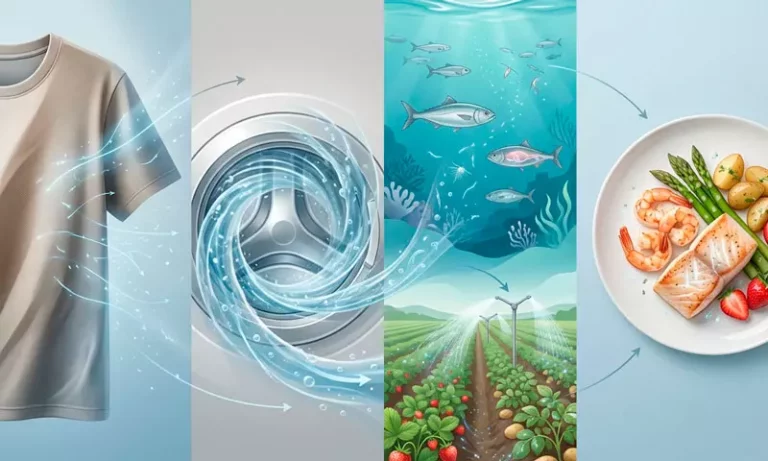
Release During Washing: Synthetic textiles shed microfibers during washing, which can enter wastewater systems and eventually reach oceans, contributing to plastic pollution.
Human Exposure: Inhalation and ingestion of microplastics have been associated with various health concerns, including gastrointestinal disturbances and potential transmission of pathogens.
Health Implications
Endocrine Disruption: Chemicals in synthetic clothing, such as phthalates and flame retardants, can interfere with hormone systems, leading to potential reproductive and developmental issues.
Respiratory and Skin Irritation: Exposure to formaldehyde and other textile chemicals can cause respiratory problems and skin irritation, particularly in individuals with sensitivities.
Ethical and Sustainable Alternatives
To mitigate these health risks, consider opting for natural fibers like organic cotton, which are less likely to contain harmful chemicals. Additionally, supporting brands that prioritize sustainable and ethical manufacturing practices can contribute to reducing the overall environmental and health impacts of the textile industry.
Moreover, the environmental impact of our clothing choices cannot be ignored. Microplastics shed from synthetic fabrics during washing find their way into our waterways, posing threats to marine life and potentially entering our food chain. The cycle of harm extends beyond our bodies, permeating the very ecosystems we depend on for survival.
As PhD researchers delve deeper into the intricacies of this issue, it becomes increasingly evident that action is imperative. Education emerges as a powerful tool in empowering consumers to make informed choices about the clothing they wear and the products they use. By raising awareness about the potential dangers of toxic clothing, individuals can take proactive steps to minimize their exposure to harmful substances.
Furthermore, the onus lies not only on consumers but also on policymakers and industry stakeholders. Implementing stringent regulations on the use of toxic chemicals in textiles and promoting sustainable manufacturing practices are essential steps towards creating a safer and healthier future.
In the face of this complex challenge, collaboration emerges as our greatest asset. PhD researchers, policymakers, industry leaders and consumers must come together to address the multifaceted issues surrounding toxic clothing. By leveraging our collective expertise and commitment to positive change, we can pave the way towards a future where human health and environmental sustainability are prioritized.
As PhD researchers continue to unravel the intricacies of this topic, one thing remains clear – the link between toxic clothing and human health is undeniable. This is a call to action that demands our attention, our dedication and our collective efforts. At Pima Prima, we are committed to studying all these topics in our Cotton Codex Project. Together, we have the power to create a world where our clothing not only adorns our bodies but also nourishes and protects them, allowing us to thrive in harmony with our environment.