T-Shirt Size Guide Flat Lay Measurements

Finding your perfect fit is easy.

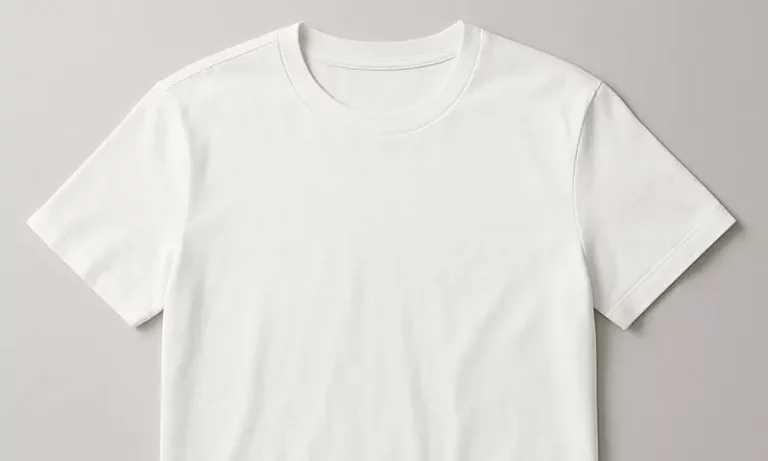
PimaPrima mesure guide t-shirt
  1. Lay a well-fitting T-shirt flat on a surface.
  2. Measure across these key areas:
  • Measure the Chest (Bust) — “A” – From armpit to armpit
  • Measure the Waist — “B” – Across the narrowest point
  • Measure the Hips — “C” – Across the bottom hem
  • Measure the Length — “D” – From the top of the shoulder (near the collar) to the bottom hem
  • Measure the Shoulders — “E” – From one shoulder seam to the other

Model 4 – Men’s Wide Shoulders Fit (Flat Measurements)

Model 4 is tailored for broad shoulders and narrow waists.
It also fits women and kids with similar body shapes.
Please check the sizing chart for the perfect fit.
SizeChest (Bust) — “A”Waist — “B”Hips — “C”Length — “D”Shoulders — “E”
inchescminchescminchescminchescminchescm
4XS16 1/441.2715 1/438.7415 1/438.7426 1/267.31410.16
3XS16 3/442.5515 3/440.0115 3/440.012768.584 1/810.48
2XS17 1/443.8116 1/441.2816 1/441.2827 1/269.854 1/410.80
XS17 3/445.0916 5/842.2316 5/842.232871.124 1/211.43
S18 1/446.3617 1/843.5217 1/843.5228 1/272.394 3/412.07
M18 7/847.9417 3/445.0917 3/445.092973.66512.70
L19 7/850.4818 3/447.6318 3/447.6329 1/274.935 1/413.34
XL20 7/853.0219 3/450.1719 3/450.173076.25 1/213.97
2XL21 1/254.6120 1/252.0720 1/252.0730 1/277.475 3/414.61
3XL2358.422255.882255.883178.74615.24
4XL24 1/262.2323 1/259.6923 1/259.6931 1/280.016 1/216.51

T-Shirt Size Guide – Flat Lay Measurements

Finding your perfect fit is easy.

PimaPrima mesure guide t-shirt
  1. Lay a well-fitting T-shirt flat on a surface.
  2. Measure across these key areas:
  • Measure the Chest (Bust) — “A” – From armpit to armpit
  • Measure the Waist — “B” – Across the narrowest point
  • Measure the Hips — “C” – Across the bottom hem
  • Measure the Length — “D” – From the top of the shoulder (near the collar) to the bottom hem
  • Measure the Shoulders — “E” – From one shoulder seam to the other

T-Shirt Size Guide Model 3 – Classic Men’s / Unisex T-Shirt

Model 3 tee with balanced proportions and clean lines.
This versatile style provides a relaxed fit suitable for all body types.
Although designed for men, it looks great on women who prefer a casual or slightly oversized tee.
SizeChest (Bust) — “A”Waist — “B”Hips — “C”Length — “D”Shoulders — “E”
-inchescminchescminchescminchescminchescm
4XS16 7/842.8615 3/440.0116 7/842.8626664 3/412.07
3XS17 3/844.1516 1/441.2817 3/844.1526 1/267.314 7/812.38
2XS17 7/845.4116 3/442.5517 7/845.412769512.70
XS18 3/846.6717 1/443.8218 3/846.6727 1/269.855 1/813.02
S19 1/848.581845.7219 1/848.5828715 1/413.34
M19 7/850.518 3/447.6319 7/850.528 1/272.395 3/813.65
L20 5/852.3919 1/249.5320 5/852.3929745 1/213.97
XL21 3/854.2920 1/451.4421 3/854.2929 1/274.935 5/814.29
2XL22 1/856.22153.3422 1/856.230765 3/414.61
3XL22 7/858.121 3/455.2522 7/858.130 1/277.475 7/814.92
4XL23 5/86022 1/257.1523 5/8603178.74615.24

T-Shirt Size Guide – Flat Lay Measurements

Finding your perfect fit is easy.

PimaPrima mesure guide t-shirt
  1. Lay a well-fitting T-shirt flat on a surface.
  2. Measure across these key areas:
  • Measure the Chest (Bust) — “A” – From armpit to armpit
  • Measure the Waist — “B” – Across the narrowest point
  • Measure the Hips — “C” – Across the bottom hem
  • Measure the Length — “D” – From the top of the shoulder (near the collar) to the bottom hem
  • Measure the Shoulders — “E” – From one shoulder seam to the other

Model 1 – Women’s & Girl’s Fitted Tee (Flat-Lay Measurements)

Designed with a flattering feminine silhouette, this tee features a gently curved waist and a tailored fit
that complements the body without clinging.
Perfectly suited for women and girls alike,  it offers a comfortable and stylish fit at any age.
SizeChest (Bust) — “A”Waist — “B”Hips — “C”Length — “D”Shoulders — “E”
inchescminchescminchescminchescminchescm
4XS14 1/236.8313 1/433.6615 1/239.3723 3/460.333 1/48.26
3XS15 1/239.371435.5616 1/441.2824 1/461.63 1/48.26
2XS16 1/441.2814 3/437.471743.182563.53 3/88.57
XS1743.1815 1/239.371845.7225 1/264.773 1/28.89
S1845.7216 1/241.911948.2626 1/466.683 5/89.21
M1948.2617 1/244.452050.826 3/467.953 3/49.53
L2050.818 1/446.362153.3427 1/469.223 7/89.84
XL2153.3419 1/448.92255.8827 3/470.49410.16
2XL2255.8820 1/451.442358.4228 1/471.764 1/810.48
3XL22 3/457.792153.3423 3/460.3328 3/473.034 1/410.80
4XL23 1/259.6921 3/455.2524 1/262.232973.664 1/211.43

Pima Prima® Size Guide


Finding the perfect fit is key to feeling comfortable and confident in your Pima Prima® T-shirt. 

Below are the essential measurements for each model to help you choose the right size.

Key Measurements Explained:

Bust/Chest

Pima Prima t-shirt measurements

Measured across the fullest part of the chest (for women) or chest width (for men)

Waist/Hips

Pima Prima t-shirt measurements

Measured at the narrowest point of the waist or fullest part of the hips (for women)

Length

Pima Prima t-shirt measurements

Measured from the highest shoulder point to the bottom hem of the T-shirt

Our Models:


Model 1 – Women’s Fitted
Designed for a flattering, feminine shape with a slightly curved waist. Perfect on its own or layered under a jacket.

Model 3 – Classic Men’s - fit a Women.
A timeless straight-cut fit with balanced proportions, suitable for all body types.

Model 4 – Men’s Wide Shoulders Fit
Created for broader chests and slimmer waists — this athletic cut tapers naturally for a clean, modern silhouette.

Note:


Models 3 and 4, designed with a relaxed and growth fit, can also perfectly suit petite women looking for an oversized, comfortable style. Just be sure to check the measurements carefully to find the best fit for you.

Fit with Confidence – And Consciousness
At Pima Prima® we want you to feel great in your T-shirt. That’s why we offer returns if you're not fully satisfied with your size. But we’re also here to address a bigger issue: the environmental impact of returns and long-distance logistics.

Every return shipped across borders contributes to unnecessary carbon emissions and packaging waste. Our goal is to reduce this burden by helping you choose the right size the first time — through clear measurements, detailed guidance and personalized support.

The problem we’re solving:
Traditional fashion returns create up to 15 million metric tons of CO₂ emissions annually and generate tons of landfill waste. We're working to minimize that footprint — not by eliminating returns, but by making them smarter, fewer, and more sustainable.

Wait! Don’t Go Yet! 👋

Don’t leave these cozy Pima Cotton outfits behind! 😊
Take another look, maybe you missed something?
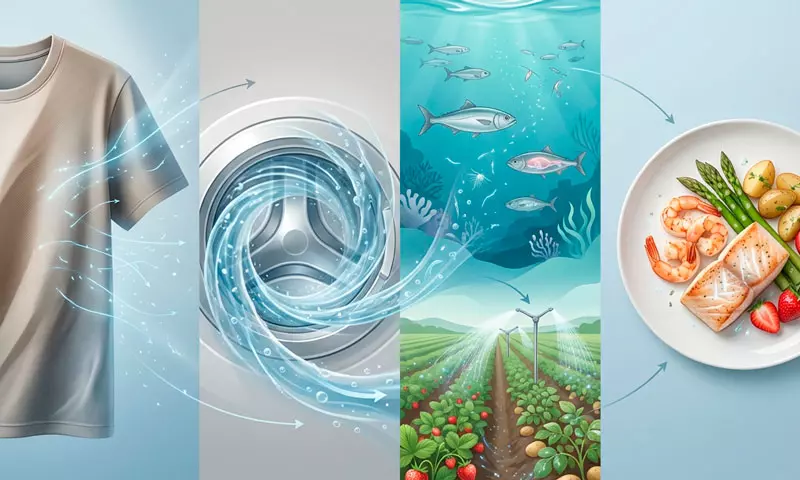
Microplastics in Clothing: The Hidden Journey from Your T-Shirt to Your Plate

Codex Entry 012 — Evidence

Microplastics from synthetic clothing have become one of the most widespread forms of environmental pollution in the modern world.
Every time garments made from polyester, nylon, acrylic and other synthetic fibers are worn, washed and discarded, they release microscopic plastic particles known as microfibers. These particles can enter rivers, lakes and oceans, where they become part of aquatic ecosystems and, ultimately, the human food chain.
Understanding how this process occurs is essential for anyone seeking to make informed decisions about clothing, sustainability and textile materials.

What Are Microplastics in Clothing?

Microplastics are plastic particles smaller than five millimeters in size.
In textiles, many microplastics originate as microfibers—tiny strands shed from synthetic fabrics during normal wear and laundering.
Unlike natural fibers such as cotton, linen, hemp and wool, synthetic fibers are primarily derived from petroleum-based polymers.
When these materials degrade, they do not biologically decompose in the same way natural fibers do. Instead, they fragment into increasingly smaller particles that may persist in the environment for many years.
Today, textile microfibers are recognized as a major source of global microplastic pollution.

The Rise of Synthetic Fibers

The global textile industry has undergone a dramatic transformation over the last century.
Polyester has become the most widely used textile fiber in the world due to its affordability, durability and ease of production. Synthetic fibers now account for the majority of global textile manufacturing. While these materials offer practical advantages, their widespread use has also introduced environmental challenges that were largely unknown before the development of synthetic textiles.
One of the most significant is microfiber shedding.

How Synthetic Clothing Releases Microfibers

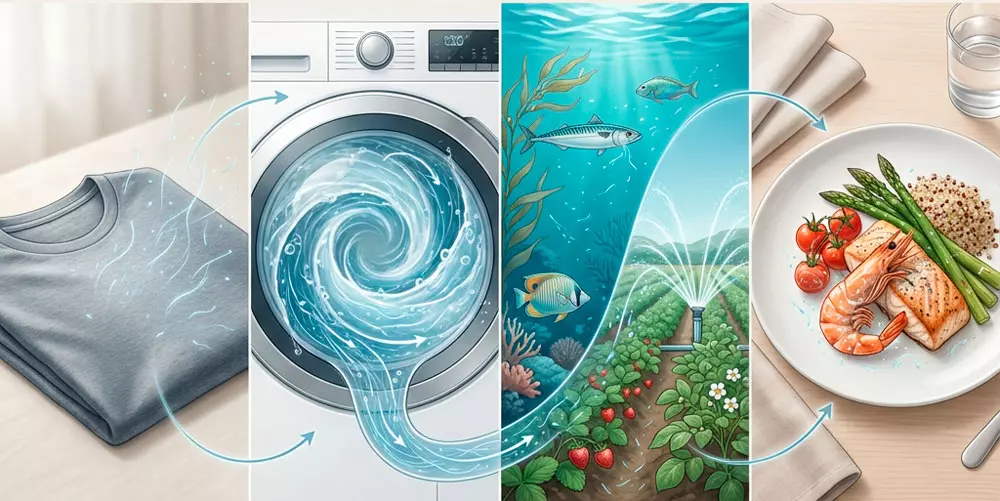
The journey begins with an ordinary garment.
As synthetic fabrics are worn, stretched, washed and dried, friction gradually loosens microscopic fibers from the surface of the textile.
During laundering, these fibers enter wastewater systems. Although modern treatment facilities remove a substantial portion of contaminants, many microfibers remain small enough to pass through filtration processes and enter natural waterways.
From there, they travel through rivers, lakes and coastal environments before reaching larger marine ecosystems.
Research has identified synthetic microfibers in oceans, freshwater systems, Arctic ice, deep-sea sediments and even remote mountain environments.
The Hidden Journey of Microfibers picture

From Laundry Machines to the Food Chain

Once released into aquatic environments, microfibers become available to a wide range of organisms. Plankton, shellfish, fish and other marine species may mistake these particles for food or consume organisms that have already accumulated them.
As microplastics move through food webs, they can be transferred from one organism to another. Researchers have documented microplastics in numerous species of seafood consumed by humans. Although scientists continue to investigate the long-term implications of this exposure, the presence of microplastics throughout marine ecosystems has become a growing area of environmental and public health research.

More Than Plastic: The Chemical Question

Microfibers may carry more than plastic alone. Textiles are often manufactured using dyes, finishing agents and chemical treatments. In addition, microplastics can absorb pollutants present in surrounding environments.
Scientists continue to study how these particles interact with biological systems and whether long-term exposure may contribute to health risks in humans and wildlife.
Many questions remain unanswered, making ongoing research particularly important.

Natural Fibers and a Different Environmental Pathway

Not all fibers behave in the same way.
Natural fibers originate from biological sources and participate in natural ecological cycles.
Extra-Long Staple (ELS) Pima cotton (Gossypium barbadense) is among the longest, strongest and finest cotton fibers known to textile science. As a natural cellulose fiber, it follows a fundamentally different environmental pathway than petroleum-based synthetic materials. Understanding these differences helps consumers evaluate durability, comfort, biodegradability and environmental impact.
While all textile production has environmental impacts, understanding the differences between natural and synthetic fibers is essential for evaluating the long-term consequences of material choices.

What Can Consumers Do?

Reducing microfiber pollution does not require perfection. Small decisions can have meaningful cumulative effects.
Consumers can help reduce microfiber pollution by:

  • Choosing natural fibers whenever possible.
  • Selecting durable garments designed for long-term use.
  • Washing synthetic garments less frequently.
  • Using laundry filters and microfiber-capturing systems.
  • Supporting research and innovation focused on sustainable textiles.
  • Learning more about the materials used in their clothing.

Every textile begins with a fiber, and understanding that fiber is often the first step toward making informed choices.

Why This Matters

The story of a garment does not end when it is purchased.
Every textile influences a broader network connecting agriculture, manufacturing, ecosystems, culture and human health.
The more we understand the materials we wear, the better equipped we become to evaluate their environmental consequences and long-term impacts.

Share your love
Secure Payments
We monitor the execution of each order very carefully.
Fast Shipping

We will send it
as soon as possible!

24/7 Support
Let us know if you have any questions or suggestions!
Bulk Prices

Looking for bulk prices
– contact us!